

Organisations no longer compete on products and price alone. Trust is quickly becoming the ultimate differentiator, and digital trust has an unforgiving fracture point, cybersecurity.
A single cyber incident can vaporise decades of brand equity overnight. Businesses are now learning this lesson from incidences and newspaper headlines, and not just from white papers and case studies anymore. In September 2023, MGM Resorts watched its Las Vegas empire grind to a halt. Slot machines went dark, room keys stopped working, guests were locked out, all because a ransomware gang exploited a single layer of identity. The estimated cost was over $100 million in lost revenue and remediation, not to mention an international reputational bruise that will take years to heal.
Rewind to May 2021. Colonial Pipeline, the artery carrying nearly half the United States’ east coast fuel supply, fell victim to a password leaked on the dark web. The CEO authorised a $4.4 million ransom payment as panic-buying emptied petrol stations while the White House scrambled. Beyond the operational paralysis, the breach exposed the uncomfortable truth that critical infrastructure trust can be shattered by an unpatched VPN or a single compromised credential.
Consider the data:
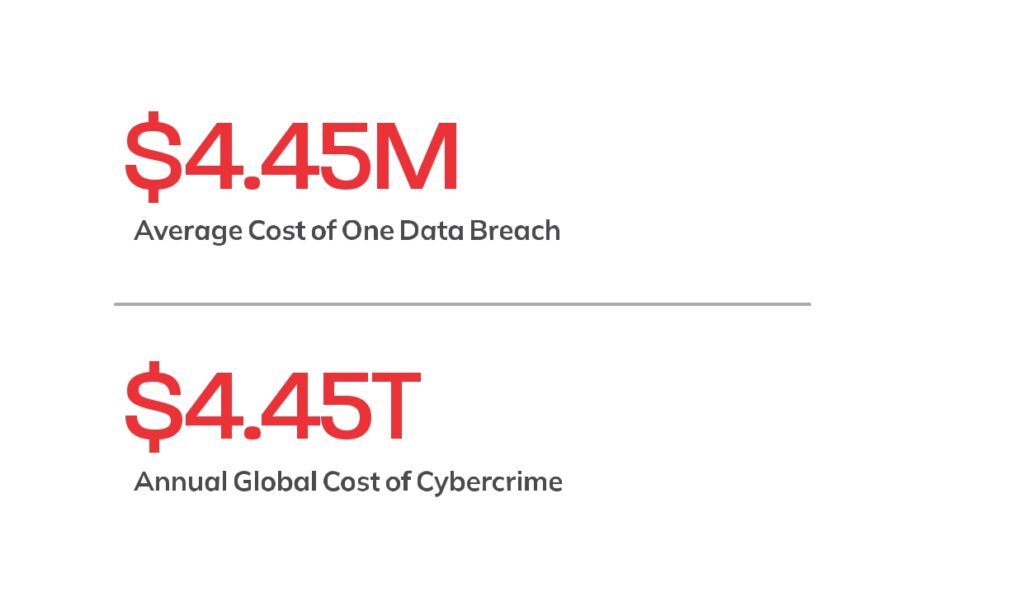
According to PwC’s research, 87% of consumers will take their business elsewhere if they don’t trust a company to handle their data responsibly.
So, what makes trust so fragile? Digital transformation has dissolved the traditional perimeter. Cloud adoption, remote work, IoT, AI-driven supply chains and third-party ecosystems have created an interdependent web where a weakness in one node can cascade into a systemic crisis. Attackers no longer just steal data; they extort, they embarrass, they erode the implicit promise a brand makes: “You are safe with us.”
Yet many organisations still treat cybersecurity as a compliance checkbox. Compliance is not trust. Compliance proves you followed a baseline; trust proves you value what you protect.
The question isn’t whether your organisation will be tested. The question is whether, when that moment comes, your partners, your clients and your stakeholders will say, “We trust them to get this right.”
Every Business is Now a Technology Business
Imagine walking into a bank. You see polished marble, tellers behind glass, a vault door thick as a promise. But the real bank isn’t there. It’s an invisible constellation of cloud instances, real-time APIs, and millions of lines of code processing billions of transactions before you blink. The bank itself is a technology company that happens to hold a banking licence. This is the inevitable destination of every industry on earth, and it completely redefines what must be protected.
JPMorgan Chase employs over 55,000 technologists and spends roughly $15 billion a year on technology. That’s more than the entire revenue of many Silicon Valley giants. Why? Because a modern bank is a software platform delivering financial services at scale. From mobile cheque deposits to real-time cross-border payments, the product is code.
When this digital reality is interrupted, the consequences are instant. In 2019, a misconfigured web application firewall at Capital One exposed the personal data of over 100 million customers. A single config error turned into a $190 million class-action settlement and an immeasurable erosion of trust. Banks solvency now depends on code integrity as much as on capital reserves.
The factory floor is no longer a world of purely physical labour. It is a web of industrial control systems, IoT sensors, and AI-driven supply chain orchestration. A modern automotive plant can produce a vehicle every sixty seconds, but that cadence stops the moment a digital link breaks.
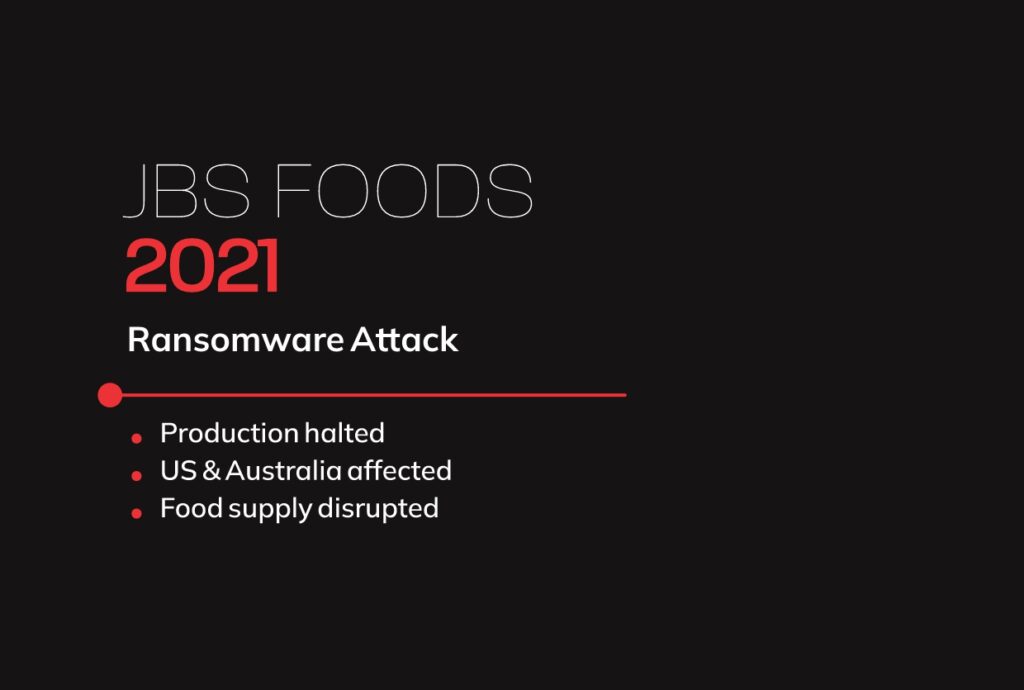
A script played out in 2021 when JBS Foods, the world’s largest meat processor, suffered a ransomware attack that halted operations across the US and Australia. The disruption sent tremors through the food supply chain, proving that even beef, pork, poultry are now digital goods until the moment they land on a plate.
Why governments are increasingly attacked
If banks are digital and hospitals are digital, then the machinery of the state is the ultimate digital prize.
Governments manage:
- Elections
- Social Services
- Defence Logistics
- Tax Collection
- and Public Health
all through interconnected technology stacks. The threat is no longer confined to espionage. Digital paralysis can destabilise entire nations, making a pillar of national sovereignty.
The story is the same whether the product is money, cars, surgery, or public trust: the business is the technology. Every transaction, every patient record, every assembly line robot, every citizen service portal is a node on a vast digital nervous system.