
A Wake-Up Call in the Cloud
In June 2025, Google Cloud experienced a control-plane incident that left businesses across the globe without access to critical services for hours.
For many, it was a wake-up call. Even the biggest cloud providers, Google, AWS, Microsoft, are not immune to failure. If your entire business depends on one provider, one outage can mean total shutdown.
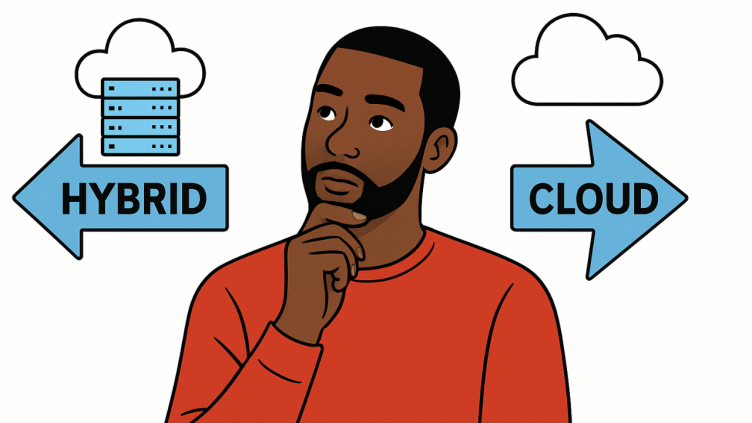
So, should enterprises abandon the cloud? Not at all. The smarter question is: Which workloads truly belong in the public cloud, and which should be placed in hybrid environments like edge or on-premises?

Where Cloud-Only Strategies Struggle
- Cost Pressures: “Pay-as-you-go” sounds great until elastic pricing, data transfer fees, and license sprawl balloon into unpredictable costs.
- Performance Limits: IoT systems, AR/VR, and real-time apps often need processing closer to the user. Distant cloud regions just can’t keep up.
- Regulatory Roadblocks: From Nigeria to Europe, data residency and portability laws are tightening. Cloud-only setups risk sudden compliance headaches.
- Resilience Risks: AWS, Google, Microsoft all have suffered multi-hour outages. Relying on one provider creates concentrated risk.
- Vendor Lock-In: Proprietary services + high egress fees = less flexibility, less negotiation power, and more long-term pain.

Principles for Smarter Cloud Strategy
Forward-thinking enterprises take a balanced approach. They:
- Classify workloads by sensitivity, latency, and variability before deciding placement.
- Use containers and open standards for portability.
- Build a unified networking fabric that spans cloud, edge, and on-prem.
- Ensure consistent observability and recovery runbooks across environments.
- Run resilience drills to prepare for the unexpected.
These are not just “hybrid rules”; they are smart placement rules. Sometimes full cloud works. Other times, hybrid is non-negotiable.
The Business Case for Balance
Executives care about outcomes. A balanced cloud strategy delivers:
- Reduced Risk → by diversifying platforms.
- Better Cost Control → manage egress & steady workloads smartly.
- Faster Delivery → match workloads to their ideal environment.
- Strategic Flexibility → stay compliant, stay competitive.
What’s Next?
The future is not about choosing sides (cloud vs. hybrid). It’s about choosing balance.
Some organisations thrive fully in the cloud. Others need hybrid setups for resilience, compliance, or cost efficiency. The key is assessment, not assumption.
Take the Next Step with Heirs Technologies
Book a 30-minute Cloud Readiness Assessment with our team. In just half an hour, you will:
- Map your workloads against performance, cost, and compliance needs.
- See where hybrid offers measurable advantage and where full cloud suffices.
- Walk away with a clear, evidence-based roadmap for your next cloud decision.